AI-Powered Customer Support: Benefits & Challenges
Nov 15, 2025
Reading time: 5 min
Customer Service
AI-Powered Customer Support: Benefits & Challenges
Nov 15, 2025
Reading time: 5 min
Customer Service

Introduction
Customer expectations are higher than ever. People want instant responses, personalised service, and round-the-clock availability. For businesses, keeping up with these demands manually can be costly and time-consuming. That’s where AI-powered customer support steps in — revolutionising the way companies interact with their customers.
From chatbots to predictive analytics, AI is helping businesses deliver faster, smarter, and more consistent service. However, as with any technology, AI-driven customer support comes with its own set of challenges.
In this article, we’ll explore the key benefits and challenges of AI-powered customer support — and how businesses can strike the right balance between automation and human connection.
Introduction
Customer expectations are higher than ever. People want instant responses, personalised service, and round-the-clock availability. For businesses, keeping up with these demands manually can be costly and time-consuming. That’s where AI-powered customer support steps in — revolutionising the way companies interact with their customers.
From chatbots to predictive analytics, AI is helping businesses deliver faster, smarter, and more consistent service. However, as with any technology, AI-driven customer support comes with its own set of challenges.
In this article, we’ll explore the key benefits and challenges of AI-powered customer support — and how businesses can strike the right balance between automation and human connection.
What Is AI-Powered Customer Support?
24/7 Availability and Instant Responses
One of the most significant advantages of AI in customer support is around-the-clock service. Unlike human agents, AI chatbots never need rest. They can respond to customer questions instantly, no matter the time zone.
This ensures:
Faster issue resolution
Increased customer satisfaction
Reduced wait times during high-demand periods
Example:
A travel company using an AI chatbot can handle booking changes or cancellations automatically, even when human agents are offline — improving both efficiency and customer trust.
What Is AI-Powered Customer Support?
24/7 Availability and Instant Responses
One of the most significant advantages of AI in customer support is around-the-clock service. Unlike human agents, AI chatbots never need rest. They can respond to customer questions instantly, no matter the time zone.
This ensures:
Faster issue resolution
Increased customer satisfaction
Reduced wait times during high-demand periods
Example:
A travel company using an AI chatbot can handle booking changes or cancellations automatically, even when human agents are offline — improving both efficiency and customer trust.
Cost Efficiency and Scalability
AI-powered support systems can handle thousands of conversations simultaneously, reducing the need for large customer service teams. This makes it easy for companies to scale operations without a proportional increase in costs.
Benefits include:
Lower hiring and training expenses
Reduced operational overhead
Consistent support quality across all channels
Example:
E-commerce businesses often use AI tools like Intercom, Drift, or Zendesk AI to manage routine inquiries, allowing human agents to focus on complex or sensitive cases.
Cost Efficiency and Scalability
AI-powered support systems can handle thousands of conversations simultaneously, reducing the need for large customer service teams. This makes it easy for companies to scale operations without a proportional increase in costs.
Benefits include:
Lower hiring and training expenses
Reduced operational overhead
Consistent support quality across all channels
Example:
E-commerce businesses often use AI tools like Intercom, Drift, or Zendesk AI to manage routine inquiries, allowing human agents to focus on complex or sensitive cases.
Personalised Customer Experiences
AI systems analyse customer data and behaviour to provide more tailored experiences. For instance, they can recommend products, predict user intent, and even adjust responses based on tone or previous interactions.
Personalisation examples:
Suggesting relevant products based on browsing history
Addressing customers by name and remembering preferences
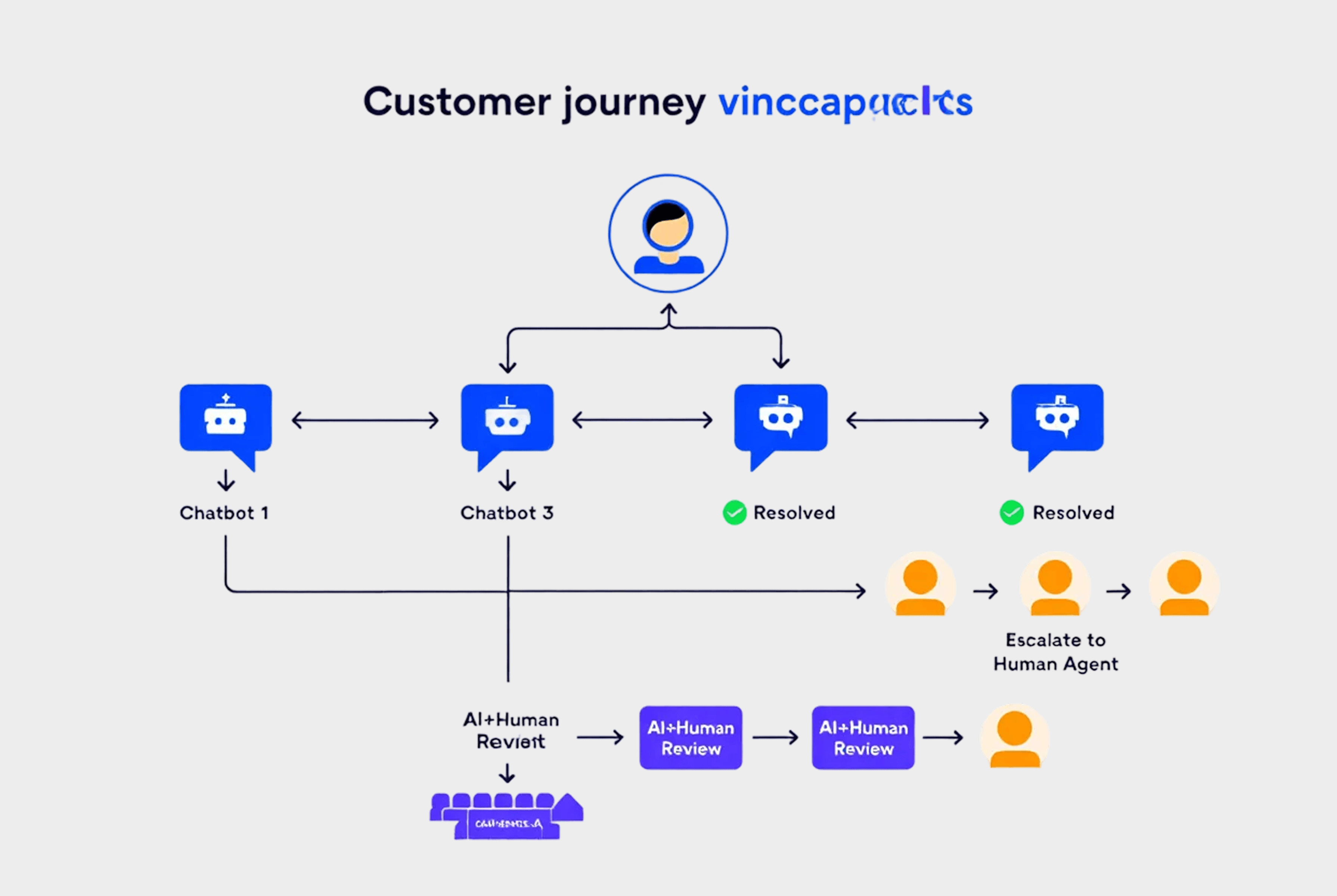
Escalating complex issues to the right human agent automatically
This type of intelligent interaction increases engagement, retention, and overall satisfaction.
Improved Data Insights and Predictive Analytics
Every customer interaction is a data goldmine. AI tools can process vast amounts of this data to identify patterns, predict customer needs, and provide actionable insights for business growth.
AI analytics can:
Identify common complaints or service gaps
Predict customer churn and suggest preventive actions
Highlight opportunities for product or service improvement
By understanding customer behaviour, businesses can make smarter decisions and proactive improvements.
Consistency and Accuracy
Unlike human agents who may vary in tone or accuracy, AI-powered systems maintain a consistent brand voice and response quality. They follow pre-set guidelines and learn continuously, ensuring reliability in every interaction.
Here are some popular tools by category:
This is particularly important for global brands that need to deliver uniform service standards across regions.
Personalised Customer Experiences
AI systems analyse customer data and behaviour to provide more tailored experiences. For instance, they can recommend products, predict user intent, and even adjust responses based on tone or previous interactions.
Personalisation examples:
Suggesting relevant products based on browsing history
Addressing customers by name and remembering preferences
Escalating complex issues to the right human agent automatically
This type of intelligent interaction increases engagement, retention, and overall satisfaction.
Improved Data Insights and Predictive Analytics
Every customer interaction is a data goldmine. AI tools can process vast amounts of this data to identify patterns, predict customer needs, and provide actionable insights for business growth.
AI analytics can:
Identify common complaints or service gaps
Predict customer churn and suggest preventive actions
Highlight opportunities for product or service improvement
By understanding customer behaviour, businesses can make smarter decisions and proactive improvements.
Consistency and Accuracy
Unlike human agents who may vary in tone or accuracy, AI-powered systems maintain a consistent brand voice and response quality. They follow pre-set guidelines and learn continuously, ensuring reliability in every interaction.
Here are some popular tools by category:
This is particularly important for global brands that need to deliver uniform service standards across regions.
The Challenges of AI-Powered Customer Support
While the benefits are clear, AI-powered customer support also faces a few challenges — especially when it comes to balancing automation with empathy.
Lack of Human Empathy and Emotional Understanding
AI can process data, but it still struggles to understand complex emotions or subtle human nuances. In sensitive situations — such as customer complaints, billing disputes, or emotional distress — AI responses can come across as robotic or impersonal.
Solution
Combine AI with human oversight. Use AI for initial triage and routine tasks, but allow seamless handoffs to human agents for empathy-driven interactions.
The Challenges of AI-Powered Customer Support
While the benefits are clear, AI-powered customer support also faces a few challenges — especially when it comes to balancing automation with empathy.
Lack of Human Empathy and Emotional Understanding
AI can process data, but it still struggles to understand complex emotions or subtle human nuances. In sensitive situations — such as customer complaints, billing disputes, or emotional distress — AI responses can come across as robotic or impersonal.
Solution
Combine AI with human oversight. Use AI for initial triage and routine tasks, but allow seamless handoffs to human agents for empathy-driven interactions.
The Challenges of AI-Powered Customer Support
While the benefits are clear, AI-powered customer support also faces a few challenges — especially when it comes to balancing automation with empathy.
Lack of Human Empathy and Emotional Understanding
AI can process data, but it still struggles to understand complex emotions or subtle human nuances. In sensitive situations — such as customer complaints, billing disputes, or emotional distress — AI responses can come across as robotic or impersonal.
Solution
Combine AI with human oversight. Use AI for initial triage and routine tasks, but allow seamless handoffs to human agents for empathy-driven interactions.
The Challenges of AI-Powered Customer Support
While the benefits are clear, AI-powered customer support also faces a few challenges — especially when it comes to balancing automation with empathy.
Lack of Human Empathy and Emotional Understanding
AI can process data, but it still struggles to understand complex emotions or subtle human nuances. In sensitive situations — such as customer complaints, billing disputes, or emotional distress — AI responses can come across as robotic or impersonal.
Solution
Combine AI with human oversight. Use AI for initial triage and routine tasks, but allow seamless handoffs to human agents for empathy-driven interactions.
Risk of Inaccurate or Irrelevant Responses
AI tools rely on algorithms and data quality. If the AI isn’t properly trained or lacks up-to-date information, it may provide incorrect answers — leading to frustration or misinformation.
This approach helps your team understand how automation fits into your workflow without overwhelming your systems. Once the first automation proves successful, expand gradually to other areas.
Solution
Regularly update AI databases and monitor performance metrics. Combine AI feedback with human quality checks to ensure accuracy and relevance.
Data Privacy and Security Concerns
AI systems handle sensitive customer data such as names, emails, and purchase details. This raises privacy and compliance issues if not managed securely.
Potential risks:
Data leaks or unauthorised access
Non-compliance with GDPR, HIPAA, or other data laws.
Solution
Choose AI tools with strong encryption, regular security audits, and transparent data policies. Always inform users how their data is being used.
Over-Reliance on Automation
Relying too heavily on AI can make businesses lose the human touch, which is often what builds loyalty. Customers still value empathy, reassurance, and genuine conversation in complex situations.
Solution
Adopt a hybrid model — where AI handles repetitive, data-driven tasks while humans focus on creative problem-solving and emotional engagement.
Risk of Inaccurate or Irrelevant Responses
AI tools rely on algorithms and data quality. If the AI isn’t properly trained or lacks up-to-date information, it may provide incorrect answers — leading to frustration or misinformation.
This approach helps your team understand how automation fits into your workflow without overwhelming your systems. Once the first automation proves successful, expand gradually to other areas.
Solution
Regularly update AI databases and monitor performance metrics. Combine AI feedback with human quality checks to ensure accuracy and relevance.
Data Privacy and Security Concerns
AI systems handle sensitive customer data such as names, emails, and purchase details. This raises privacy and compliance issues if not managed securely.
Potential risks:
Data leaks or unauthorised access
Non-compliance with GDPR, HIPAA, or other data laws.
Solution
Choose AI tools with strong encryption, regular security audits, and transparent data policies. Always inform users how their data is being used.
Over-Reliance on Automation
Relying too heavily on AI can make businesses lose the human touch, which is often what builds loyalty. Customers still value empathy, reassurance, and genuine conversation in complex situations.
Solution
Adopt a hybrid model — where AI handles repetitive, data-driven tasks while humans focus on creative problem-solving and emotional engagement.
How to Get the Best Out of AI-Powered Support
Define clear goals: Decide which customer issues you want AI to handle.
Start small: Begin with basic queries and expand gradually.
Monitor performance: Use KPIs like response time, satisfaction rate, and resolution accuracy.
Blend AI with humans: Always keep a human fallback option for complex cases.
Continuously improve: Retrain AI models regularly with new data and feedback.
How to Get the Best Out of AI-Powered Support
Define clear goals: Decide which customer issues you want AI to handle.
Start small: Begin with basic queries and expand gradually.
Monitor performance: Use KPIs like response time, satisfaction rate, and resolution accuracy.
Blend AI with humans: Always keep a human fallback option for complex cases.
Continuously improve: Retrain AI models regularly with new data and feedback.
The Future of AI in Customer Support
The future is a hybrid model — where AI and human agents work together to deliver seamless, intelligent support. With continuous advancements in natural language processing (NLP) and emotion recognition, AI systems are becoming more conversational and empathetic.
Soon, customers won’t just chat with bots — they’ll have meaningful, human-like interactions that feel natural, helpful, and personalised.
The Future of AI in Customer Support
The future is a hybrid model — where AI and human agents work together to deliver seamless, intelligent support. With continuous advancements in natural language processing (NLP) and emotion recognition, AI systems are becoming more conversational and empathetic.
Soon, customers won’t just chat with bots — they’ll have meaningful, human-like interactions that feel natural, helpful, and personalised.
Conclusion
AI-powered customer support is transforming the way businesses connect with their customers — offering faster responses, smarter insights, and cost-effective scalability. However, the true power of AI lies in enhancing human support, not replacing it.
By blending automation with empathy, businesses can deliver exceptional service experiences that are efficient, intelligent, and deeply human.
Conclusion
AI-powered customer support is transforming the way businesses connect with their customers — offering faster responses, smarter insights, and cost-effective scalability. However, the true power of AI lies in enhancing human support, not replacing it.
By blending automation with empathy, businesses can deliver exceptional service experiences that are efficient, intelligent, and deeply human.
Categories
Business Automation
Software
Industry Trends
Marketing & Sales
How-To Guides
Healthcare
How-To Guides
Customer Service
Case Studies
E-commerce & Retail
Categories
Business Automation
Software
Industry Trends
Marketing & Sales
How-To Guides
How-To Guides
Customer Service
Case Studies
E-commerce & Retail