How to Integrate AI Automation into Your Workflow
Nov 14, 2025
Reading time: 7 min
Industry Insights
How to Integrate AI Automation into Your Workflow
Nov 14, 2025
Reading time: 7 min
Industry Insights

Introduction
In today’s fast-paced business landscape, efficiency is everything. Artificial Intelligence (AI) automation has become one of the most powerful tools to help businesses save time, reduce human error, and focus on meaningful work. But for many organisations, the real challenge lies in integrating AI automation effectively into their existing workflows.
Whether you run a small business or manage a large enterprise, this guide will walk you through the steps, tools, and strategies to seamlessly adopt AI automation and transform how you work.
Introduction
In today’s fast-paced business landscape, efficiency is everything. Artificial Intelligence (AI) automation has become one of the most powerful tools to help businesses save time, reduce human error, and focus on meaningful work. But for many organisations, the real challenge lies in integrating AI automation effectively into their existing workflows.
Whether you run a small business or manage a large enterprise, this guide will walk you through the steps, tools, and strategies to seamlessly adopt AI automation and transform how you work.
Understand What AI Automation Can Do for You
Before jumping into integration, it’s crucial to understand what AI automation is and how it applies to your specific goals. AI automation uses intelligent systems to perform repetitive or data-driven tasks automatically — from analysing emails to generating reports, scheduling meetings, or managing customer service.
Common applications include:
Automating administrative and data-entry tasks
Generating marketing content or emails
Managing customer support through AI chatbots
Streamlining HR operations like recruitment and onboarding
Forecasting sales or inventory needs with predictive analytics
Start by identifying which tasks in your daily operations consume time but don’t necessarily require human creativity or judgment. Those are your best candidates for automation.
Understand What AI Automation Can Do for You
Before jumping into integration, it’s crucial to understand what AI automation is and how it applies to your specific goals. AI automation uses intelligent systems to perform repetitive or data-driven tasks automatically — from analysing emails to generating reports, scheduling meetings, or managing customer service.
Common applications include:
Automating administrative and data-entry tasks
Generating marketing content or emails
Managing customer support through AI chatbots
Streamlining HR operations like recruitment and onboarding
Forecasting sales or inventory needs with predictive analytics
Start by identifying which tasks in your daily operations consume time but don’t necessarily require human creativity or judgment. Those are your best candidates for automation.
Map Out Your Current Workflow
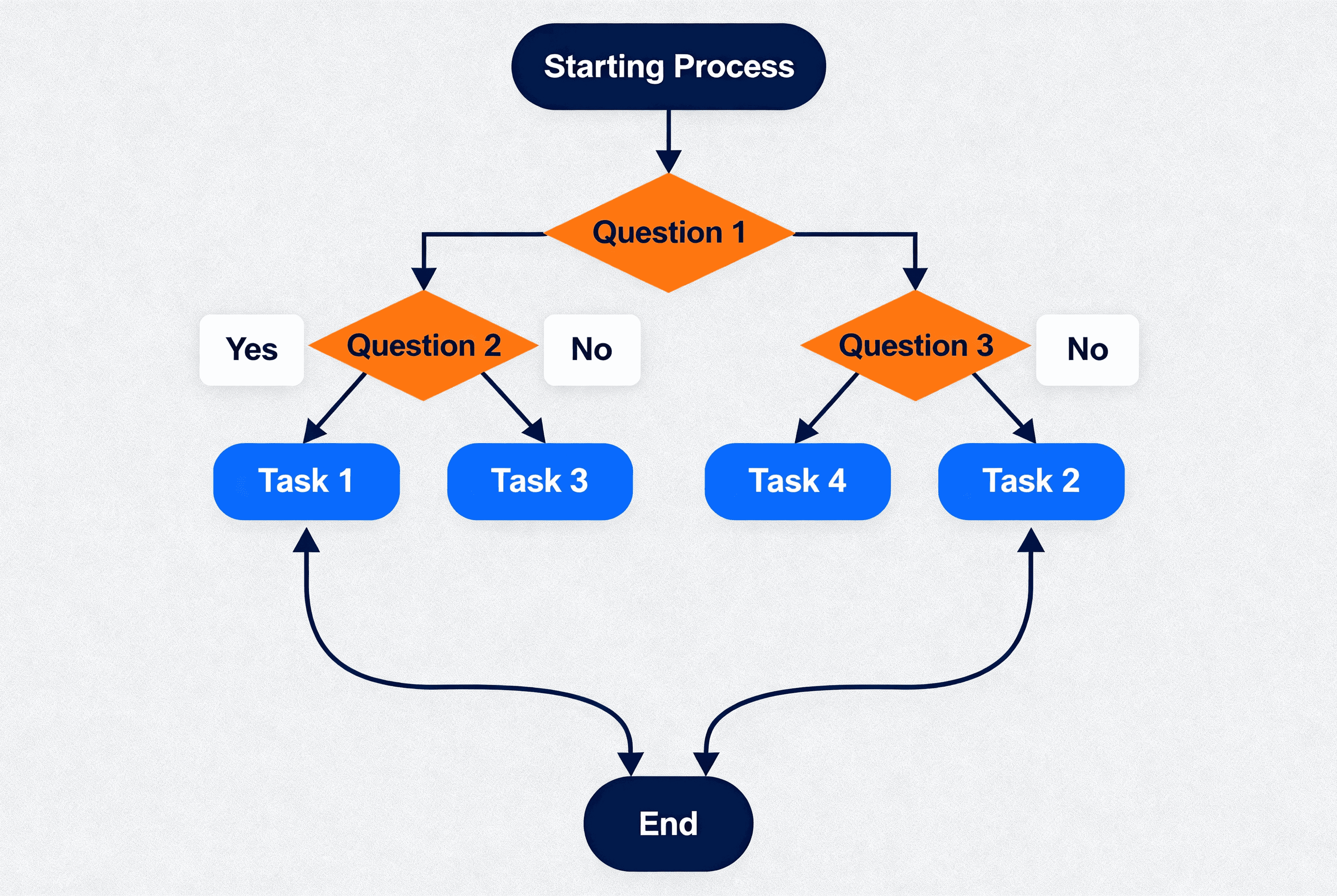
Integration begins with understanding how your current processes function. Take time to map out each step of your workflow — from task creation to completion — and note where bottlenecks or inefficiencies occur.
Ask yourself:
Which tasks are repetitive or time-consuming?
Generating code for websites and apps
What data do you already collect that could train AI models?
Creating a visual workflow map helps you identify the areas where AI can deliver the most immediate impact — such as automating report generation, email sorting, or customer response tracking.
Map Out Your Current Workflow
Integration begins with understanding how your current processes function. Take time to map out each step of your workflow — from task creation to completion — and note where bottlenecks or inefficiencies occur.
Ask yourself:
Which tasks are repetitive or time-consuming?
Generating code for websites and apps
What data do you already collect that could train AI models?
Creating a visual workflow map helps you identify the areas where AI can deliver the most immediate impact — such as automating report generation, email sorting, or customer response tracking.
Choose the Right AI Automation Tools
The next step is selecting the right AI tools for your specific use case. There are thousands of automation platforms available in 2025, each designed for different purposes — from marketing automation to HR, analytics, and customer experience.
Here are some popular tools by category:
Workflow Automation
Zapier – Connects thousands of apps to automate data flow.
Make (Integromat) – Advanced workflow automation for complex tasks.
Marketing & Sales Automation
HubSpot – AI-driven marketing, CRM, and lead nurturing.
ActiveCampaign – Personalised email and customer journey automation.
HR & Operations
SaaSLab HR – Automates employee management, onboarding, and reporting.
BambooHR – Simplifies HR data and performance tracking.
Customer Support
Intercom or Drift – Smart chatbots and conversation management.
Zendesk AI – Automates ticketing and customer issue resolution.
AI Productivity Tools
ChatGPT – For writing, ideation, and automated communication.
Notion AI / ClickUp AI – Smart task management and documentation.
Choose tools that integrate easily with your existing systems — for example, connecting Slack, Google Workspace, or Trello to your automation setup.
Choose the Right AI Automation Tools
The next step is selecting the right AI tools for your specific use case. There are thousands of automation platforms available in 2025, each designed for different purposes — from marketing automation to HR, analytics, and customer experience.
Here are some popular tools by category:
Workflow Automation
Zapier – Connects thousands of apps to automate data flow.
Make (Integromat) – Advanced workflow automation for complex tasks.
Marketing & Sales Automation
HubSpot – AI-driven marketing, CRM, and lead nurturing.
ActiveCampaign – Personalised email and customer journey automation.
HR & Operations
SaaSLab HR – Automates employee management, onboarding, and reporting.
BambooHR – Simplifies HR data and performance tracking.
Customer Support
Intercom or Drift – Smart chatbots and conversation management.
Zendesk AI – Automates ticketing and customer issue resolution.
AI Productivity Tools
ChatGPT – For writing, ideation, and automated communication.
Notion AI / ClickUp AI – Smart task management and documentation.
Choose tools that integrate easily with your existing systems — for example, connecting Slack, Google Workspace, or Trello to your automation setup.
Keep Evolving with AI Innovations
AI automation is evolving rapidly. What works today might be outdated next year. To stay ahead, keep experimenting with new integrations, plugins, and updates.
Future-ready organisations:
Stay informed on AI advancements
Regularly update automation models
Encourage feedback from employees and customers
Adopt scalable, cloud-based systems
Continuous improvement ensures your workflow stays competitive, adaptive, and aligned with the latest industry standards.
Conclusion
Integrating AI automation into your workflow isn’t just about technology — it’s about transforming how your team works. By automating repetitive tasks, optimising operations, and empowering employees, AI helps businesses achieve higher productivity, smarter decisions, and sustainable growth.
Start small, learn continuously, and expand strategically — and soon, you’ll experience the true power of AI-driven efficiency in your organisation.
Keep Evolving with AI Innovations
AI automation is evolving rapidly. What works today might be outdated next year. To stay ahead, keep experimenting with new integrations, plugins, and updates.
Future-ready organisations:
Stay informed on AI advancements
Regularly update automation models
Encourage feedback from employees and customers
Adopt scalable, cloud-based systems
Continuous improvement ensures your workflow stays competitive, adaptive, and aligned with the latest industry standards.
Conclusion
Integrating AI automation into your workflow isn’t just about technology — it’s about transforming how your team works. By automating repetitive tasks, optimising operations, and empowering employees, AI helps businesses achieve higher productivity, smarter decisions, and sustainable growth.
Start small, learn continuously, and expand strategically — and soon, you’ll experience the true power of AI-driven efficiency in your organisation.
Start Small: Automate One Process at a Time
A common mistake is trying to automate everything at once. Instead, start with one process, such as email responses, task scheduling, or lead tracking.
This approach helps your team understand how automation fits into your workflow without overwhelming your systems. Once the first automation proves successful, expand gradually to other areas.
Example:
Start by automating invoice processing in your finance department. After seeing improved accuracy and time savings, you can move on to automating client follow-ups or performance reporting.
Start Small: Automate One Process at a Time
A common mistake is trying to automate everything at once. Instead, start with one process, such as email responses, task scheduling, or lead tracking.
This approach helps your team understand how automation fits into your workflow without overwhelming your systems. Once the first automation proves successful, expand gradually to other areas.
Example:
Start by automating invoice processing in your finance department. After seeing improved accuracy and time savings, you can move on to automating client follow-ups or performance reporting.
Train Your Team and Build AI Awareness
AI automation isn’t just about technology — it’s about people. For a successful integration, your team must understand how to use and trust AI tools.
Practical steps:
Conduct training sessions or workshops.
Explain how automation reduces workload, not jobs.
Encourage employees to identify areas where AI could help them personally.
When your team feels confident using AI tools, adoption becomes smoother and productivity increases.
Train Your Team and Build AI Awareness
AI automation isn’t just about technology — it’s about people. For a successful integration, your team must understand how to use and trust AI tools.
Practical steps:
Conduct training sessions or workshops.
Explain how automation reduces workload, not jobs.
Encourage employees to identify areas where AI could help them personally.
When your team feels confident using AI tools, adoption becomes smoother and productivity increases.
Monitor, Measure, and Optimise
Once your AI automations are live, it’s essential to track performance metrics and measure results. Evaluate how much time, money, or errors you’ve saved and whether the automation meets your goals.
Use AI dashboards or built-in analytics to monitor:
Task completion times
Employee productivity improvements
Customer response rates
Accuracy and consistency of automated outputs
Regular reviews help you optimise workflows and identify areas where the automation can be refined or expanded.
Monitor, Measure, and Optimise
Once your AI automations are live, it’s essential to track performance metrics and measure results. Evaluate how much time, money, or errors you’ve saved and whether the automation meets your goals.
Use AI dashboards or built-in analytics to monitor:
Task completion times
Employee productivity improvements
Customer response rates
Accuracy and consistency of automated outputs
Regular reviews help you optimise workflows and identify areas where the automation can be refined or expanded.
Ensure Data Security and Compliance
As you integrate AI automation, make sure to follow data protection regulations and maintain ethical standards. AI systems often handle sensitive information, so it’s critical to choose tools that comply with frameworks like GDPR or HIPAA (for healthcare).
Best practices include:
Using encrypted data storage
Limiting access to authorised personnel
Regularly auditing AI decision-making for fairness and bias
Maintaining transparency and compliance not only protects your business but also builds trust with clients and users.
Ensure Data Security and Compliance
As you integrate AI automation, make sure to follow data protection regulations and maintain ethical standards. AI systems often handle sensitive information, so it’s critical to choose tools that comply with frameworks like GDPR or HIPAA (for healthcare).
Best practices include:
Using encrypted data storage
Limiting access to authorised personnel
Regularly auditing AI decision-making for fairness and bias
Maintaining transparency and compliance not only protects your business but also builds trust with clients and users.
Scale Up Your Automation Efforts
Once you’ve tested, measured, and optimised smaller automations, it’s time to scale across departments. AI can now handle cross-functional operations — connecting marketing with sales, HR with payroll, and customer support with CRM systems.
At this stage, consider implementing a hyper-automation strategy — combining multiple AI technologies like RPA (Robotic Process Automation), machine learning, and natural language processing (NLP) to manage larger, more complex systems autonomously.
Example:
A retail company might automate inventory tracking, customer service responses, and personalised marketing simultaneously — creating a seamless, data-driven ecosystem.
Scale Up Your Automation Efforts
Once you’ve tested, measured, and optimised smaller automations, it’s time to scale across departments. AI can now handle cross-functional operations — connecting marketing with sales, HR with payroll, and customer support with CRM systems.
At this stage, consider implementing a hyper-automation strategy — combining multiple AI technologies like RPA (Robotic Process Automation), machine learning, and natural language processing (NLP) to manage larger, more complex systems autonomously.
Example:
A retail company might automate inventory tracking, customer service responses, and personalised marketing simultaneously — creating a seamless, data-driven ecosystem.
Keep Evolving with AI Innovations
AI automation is evolving rapidly. What works today might be outdated next year. To stay ahead, keep experimenting with new integrations, plugins, and updates.
Future-ready organisations:
Stay informed on AI advancements
Regularly update automation models
Encourage feedback from employees and customers
Adopt scalable, cloud-based systems
Continuous improvement ensures your workflow stays competitive, adaptive, and aligned with the latest industry standards.
Conclusion
Integrating AI automation into your workflow isn’t just about technology — it’s about transforming how your team works. By automating repetitive tasks, optimising operations, and empowering employees, AI helps businesses achieve higher productivity, smarter decisions, and sustainable growth.
Start small, learn continuously, and expand strategically — and soon, you’ll experience the true power of AI-driven efficiency in your organisation.
Keep Evolving with AI Innovations
AI automation is evolving rapidly. What works today might be outdated next year. To stay ahead, keep experimenting with new integrations, plugins, and updates.
Future-ready organisations:
Stay informed on AI advancements
Regularly update automation models
Encourage feedback from employees and customers
Adopt scalable, cloud-based systems
Continuous improvement ensures your workflow stays competitive, adaptive, and aligned with the latest industry standards.
Conclusion
Integrating AI automation into your workflow isn’t just about technology — it’s about transforming how your team works. By automating repetitive tasks, optimising operations, and empowering employees, AI helps businesses achieve higher productivity, smarter decisions, and sustainable growth.
Start small, learn continuously, and expand strategically — and soon, you’ll experience the true power of AI-driven efficiency in your organisation.
Categories
Business Automation
Software
Industry Trends
Marketing & Sales
How-To Guides
Healthcare
How-To Guides
Customer Service
Case Studies
E-commerce & Retail
Categories
Business Automation
Software
Industry Trends
Marketing & Sales
How-To Guides
How-To Guides
Customer Service
Case Studies
E-commerce & Retail